Solidago care
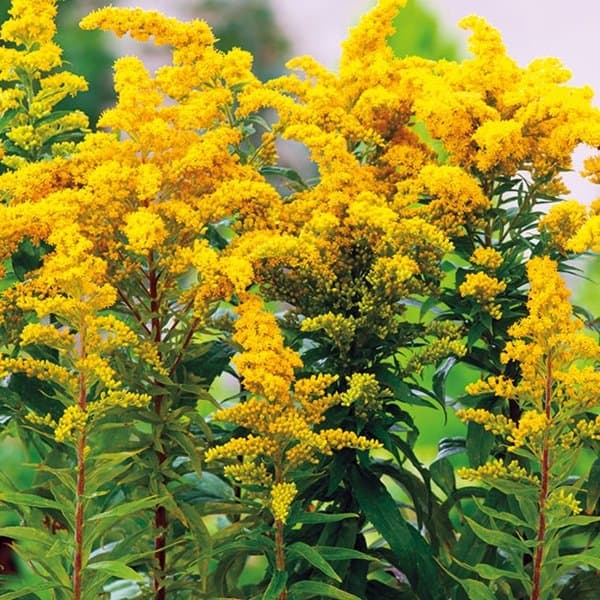
Solidago — goldenrod — is the warm golden haze that lifts a bouquet. Feathery plumes of tiny yellow flowers on an upright stem, it works as nature's own filler, bringing brightness and a soft, branching texture around bolder blooms.
Season
Year-round
Vase life
Long
Sourcing
Direct from growers
Difficulty
Very easy
How to care for them
Re-cut each stem at a sharp angle. Strip any leaves below the waterline. Cool clean water in a clean vase — solidago is undemanding and drinks steadily.
Refresh the water every few days. Solidago holds its golden plumes well and keeps going alongside the longer-lasting stems in a bouquet. Keep out of direct sun.
Solidago rarely needs rescuing. If it droops, re-cut and refresh the water; recovery is quick. It is one of the more reliable filler stems we send.
Common questions
A long display — solidago is a hardy, long-lasting filler that often outlasts the feature flowers it accompanies. Fresh water and a cool spot are all it needs. Every order carries our Stem freshness promise.
Yes — solidago is the botanical name for goldenrod. The florist varieties are cultivated for finer, softer plumes than the wild roadside goldenrod, but they are the same plant family.
Despite its reputation, goldenrod is largely unfairly blamed — it is insect-pollinated, so it releases little airborne pollen. The hay-fever culprit that flowers at the same time is usually ragweed, which looks quite different.
A golden, feathery filler. It brings warmth and soft branching texture around bolder flowers, lifting an arrangement with brightness. It works year-round and is especially at home in autumn palettes.
Yes — solidago dries well. Hang the stems upside down in a dry, dark spot and the golden plumes hold their colour and feathery shape, useful in dried arrangements.
A light, slightly green-herbal scent. It is chosen for its colour and texture rather than fragrance, and the scent rarely registers in a mixed bouquet.
Solidago (goldenrod) is not listed as toxic to cats or dogs. As with any cut flower, do not encourage pets to chew the stems, but the flower itself is considered safe.
Pairs beautifully with