Sweet pea care
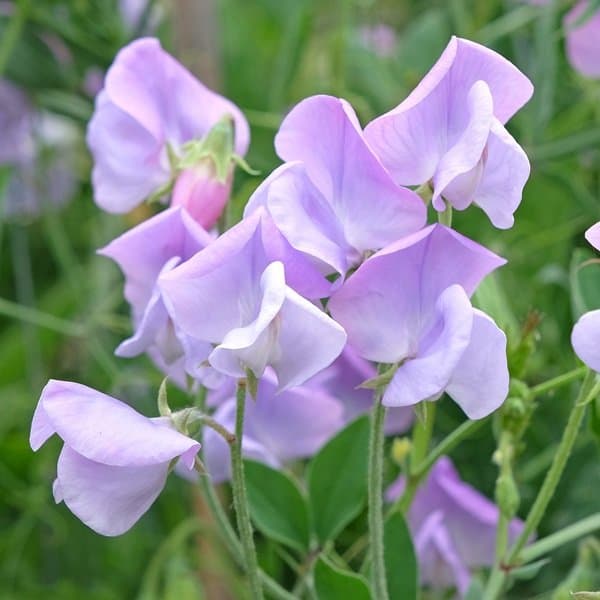
The sweet pea is summer's softest flower. Tiny ruffled blooms in a hundred shades, carried on a thread of a stem, perfumed beyond all reason for their size. They do not last as long as a peony or a rose, and that is the point — they are a moment, not a fixture.
Season
April–September
Vase life
Short
Sourcing
Direct from growers
Difficulty
Easy
How to care for them
Sweet peas are delicate — handle gently. Re-cut at a sharp angle, very gently. Cool clean water in a clean vase, not deep. They like a cool spot.
Refresh the water every two days. Pinch off any flowers that finish — they tend to fade in sequence along each stem. Keep cool, out of direct sun.
Sweet peas are short-lived even with perfect care. If they wilt early, re-cut the stem and check the water. Most of the time, accept the shorter window — that is the trade for the scent.
Common questions
Several days at best. Sweet peas are short-lived by nature — even in the field, the flower is brief. The scent and the colour are what you are paying for; the length of the display is a smaller bonus. Every order is covered by our Stem freshness promise.
The scent is what the flower is famous for — sweet, honeyed, with notes of orange blossom. Biologically it attracts pollinators; aesthetically it is the entire reason to have sweet peas in the house. The scent intensifies in warmth and dissipates in cool, draughty rooms.
The seeds and pods of sweet peas (Lathyrus odoratus) are toxic to cats and dogs if eaten — they contain a compound that can cause weakness and tremors. The cut flowers themselves are low-risk because there are no seeds, but keep them out of reach of pets that graze.
They are naturally short-lived. Warm rooms shorten them further. Re-cut the stems and move to the coolest spot in the house — this can buy an extra day. If they wilt within hours of arriving, contact the studio.
Sweet pea season runs from April through September, peaking in June and July. Outside this window the scent can be slightly less intense than peak-season stems.
Most are, but some modern cultivars have been bred for colour or size at the expense of fragrance. The varieties we use are selected for scent first — that is the point of the flower.
Pairs beautifully with