Phalaenopsis orchid care
Phalaenopsis
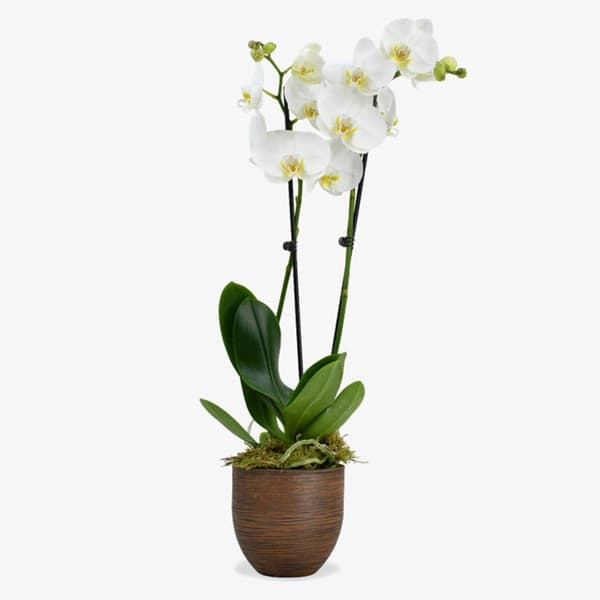
The Phalaenopsis — moth orchid — is the most forgiving orchid in cultivation and the one you have almost certainly seen on a windowsill. Long-lasting blooms in white, pink, purple, yellow or bicolour; care that quickly becomes second nature; and a reflowering cycle that rewards patient owners year after year.
Light
Bright indirect
Water
Moderate
Sourcing
Direct from growers
Pet safety
Pet-safe
Difficulty
Easy
How to care for it
Place in bright indirect light. Phalaenopsis orchids grow on tree trunks in the wild — they want filtered light, not direct sun. East or north-facing windows are ideal. Avoid south or west windows unless filtered. Check the planting medium — orchids are usually in coarse bark, not soil.
Water roughly once a week, less in winter. The technique matters: place the orchid in the sink, water the bark thoroughly, let it drain completely. Never leave the orchid sitting in standing water. The roots in clear pots should look silvery-grey when dry and bright green after watering. Feed monthly during growth with a specialist orchid fertiliser at half-strength.
Yellow lower leaves: natural — orchids shed old leaves over time. Yellow upper leaves: overwatering or too much direct sun. Wrinkled leaves: dehydration; water more often. Wilted flowers in days: usually a temperature shock or draft. No new flower spikes: needs a cool spell (around 15°C at night for a few weeks) to trigger reflowering.
Common questions
Roughly once a week, less in winter — but the answer depends on your environment. The orchid bark should mostly dry out between waterings. Check the roots through the clear pot: silvery-grey roots want water; bright green roots are still moist. Watering by feel beats any calendar.
Yes, with the right trigger. Phalaenopsis orchids need a temperature drop to initiate a new flower spike — around 15°C at night for several weeks. Many homes do this naturally in autumn. Cut the old spike just above a node and a new spike often emerges from below it.
If the oldest leaves at the base yellow occasionally, that is natural turnover. If upper leaves yellow or many leaves yellow at once, it is overwatering, too much direct sun, or root rot. Let the bark dry out between waterings and check the roots — healthy orchid roots are firm and pale; rotten roots are mushy and dark.
Yes — Phalaenopsis is non-toxic to cats and dogs. The plant most commonly sold as an orchid is also one of the most pet-safe houseplants we send. Discourage pets from chewing the flowers, but it is not harmful.
Each individual flower lasts many weeks; a healthy spike with several flowers can hold for two or three months. After the spike finishes, the leaves continue to grow and the plant prepares for the next flowering cycle.
Yes. Cut the spike just above a node (the small swellings along the stem) — a new branching spike often emerges from below the cut. If the whole spike browns and dries, cut it off at the base; the plant will produce a fresh spike next cycle.
Normal. Phalaenopsis orchids grow aerial roots that reach into the air to absorb humidity — they are not in trouble. Do not cut them off or try to bury them. If too many aerial roots emerge, the plant may simply want repotting into slightly fresher bark.
See also