Alstroemeria care
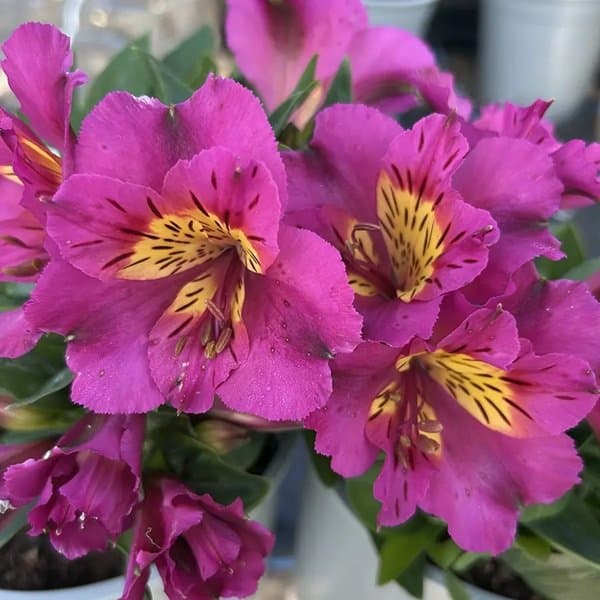
Alstroemeria — the Peruvian lily — is the quiet endurance champion of the bouquet. Clusters of small lily-like flowers on a single stem, freckled and many-coloured, and a vase life that shames almost everything around them.
Season
Year-round
Vase life
Very long
Sourcing
Direct from growers
Difficulty
Very easy
How to care for them
Pull rather than cut the leaves from the lower stem — alstroemeria foliage rots quickly underwater and shortens the display. Re-cut the stem at a sharp angle. Cool clean water in a clean vase; alstroemeria is not fussy about depth.
Refresh the water every few days. Each stem carries several buds that open in sequence over a long period, so remove spent flowers to keep the cluster looking fresh. Keep out of direct sun.
Alstroemeria rarely needs rescuing — it is one of the most resilient stems we send. If it droops, re-cut and refresh the water and it recovers readily.
Common questions
Among the longest-lasting cut flowers we send — often well over a fortnight with the right care. The secret is stripping the lower foliage (which spoils the water) and refreshing the water regularly. Every order carries our Stem freshness promise.
Alstroemeria leaves yellow and rot in water faster than the flowers fade, clouding the water and shortening the display. Gently pulling them from the lower stem removes them cleanly and keeps the water fresh longer.
Yes — each stem carries a cluster of buds that open in sequence over many days. That staggered opening is what gives alstroemeria its exceptional vase life.
A wide range — white, cream, yellow, orange, pink, red, purple and many bicolours, most marked with the characteristic freckling on the inner petals. The studio selects by what the season offers best.
Almost none — it is a visual flower chosen for colour and longevity rather than fragrance. For scent in a mixed bouquet, the studio pairs it with freesia, stock or sweet pea.
Not quite — it is commonly called the Peruvian lily for its lily-like flowers, but it is a different plant entirely. Importantly, it does not carry the severe toxicity to cats that true lilies do, though it is still best kept away from grazing pets.
Mildly toxic to cats and dogs if eaten — it can cause an upset stomach, and handling the sap can irritate skin in sensitive people. Keep the vase out of reach of pets that graze on plants.
Pairs beautifully with