
Plants and gardens
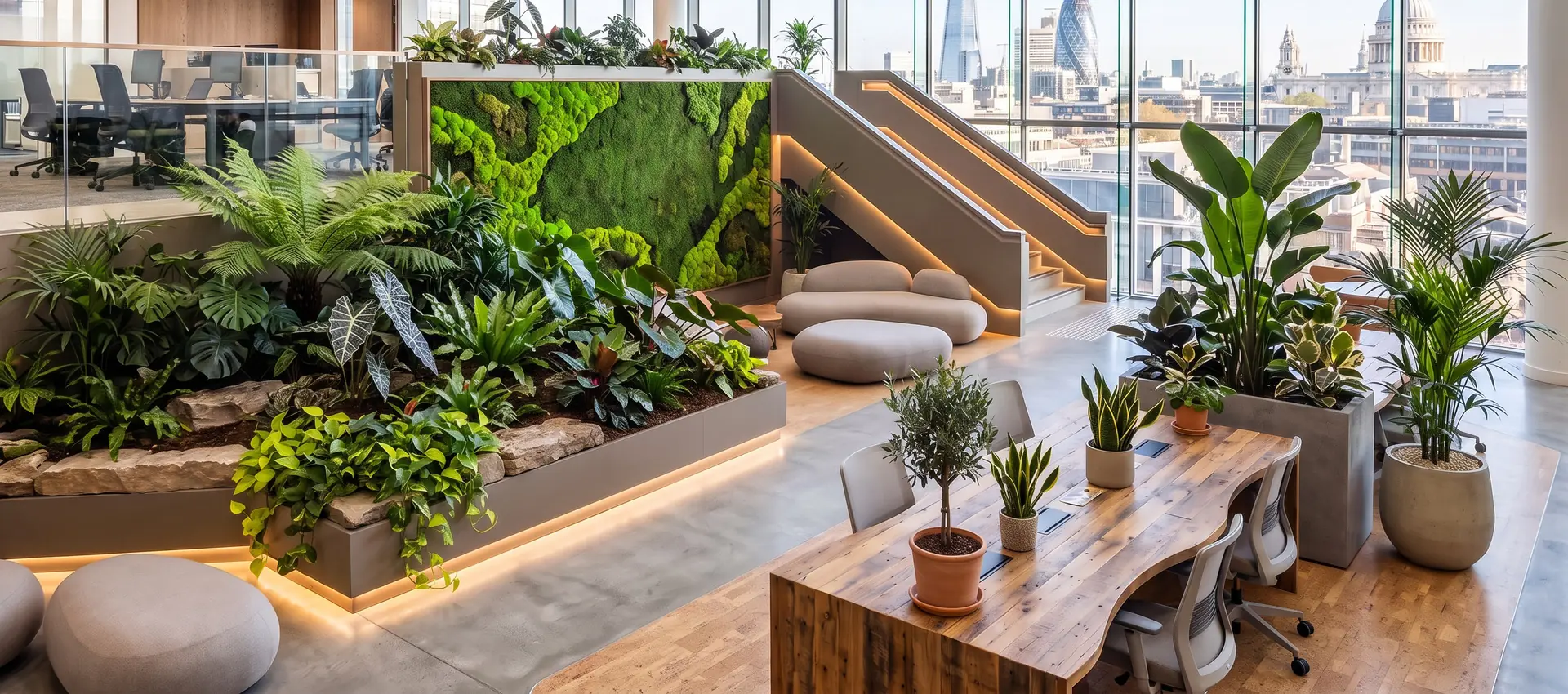
Garden and office plant services in London
Indoor planting and outdoor gardens, cared for by the same horticulturists who have been supplying London since 1876. For hotels, restaurants, workplaces and private houses, on a schedule or as a single piece of work.
What we do
Two halves of the same trade.
Indoors
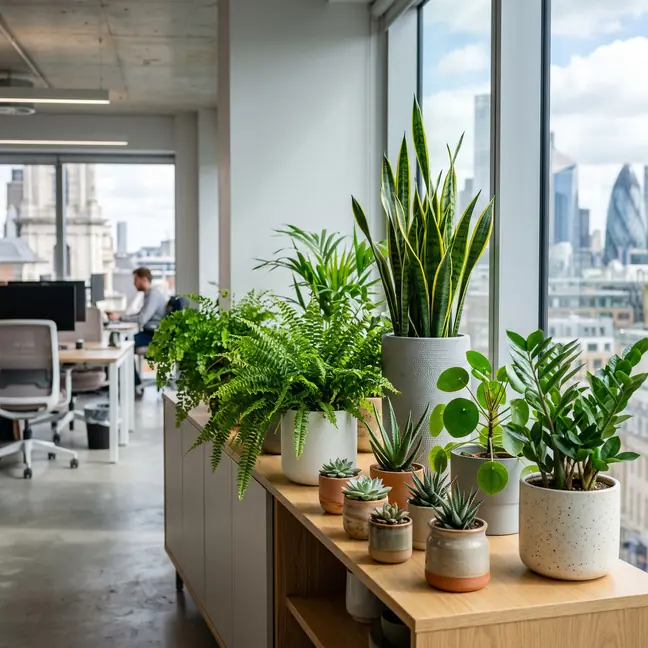
Indoor plants
Displays, planting schemes and the maintenance that keeps them right, for workplaces, hotels, restaurants and clubs.
Plant displays
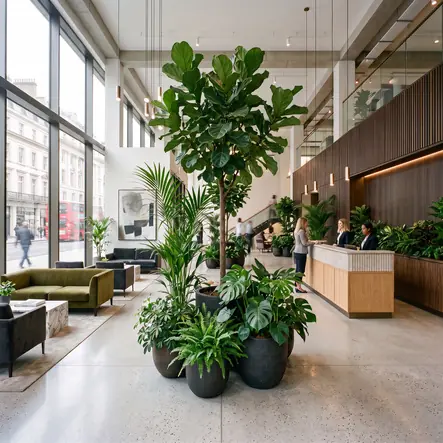
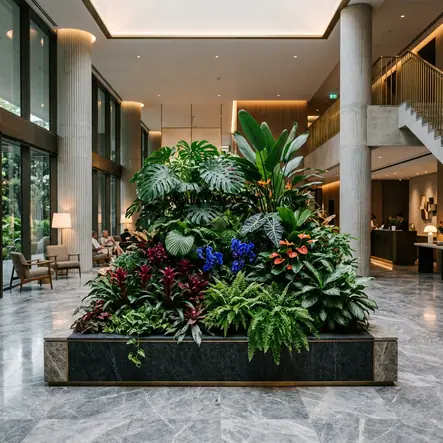
Specified, planted and installed for receptions, atria, workspaces and hotel interiors.
Plant maintenance
Scheduled visits to water, feed, prune, clean and rotate. On our plants or on plants you already own.
Planting schemes
Design work for fit-outs and refurbishments, drawn to the space and the light it actually gets.
Planters and containers
Specified to the interior rather than the catalogue, in finishes chosen to sit with the scheme.
Living and moss walls
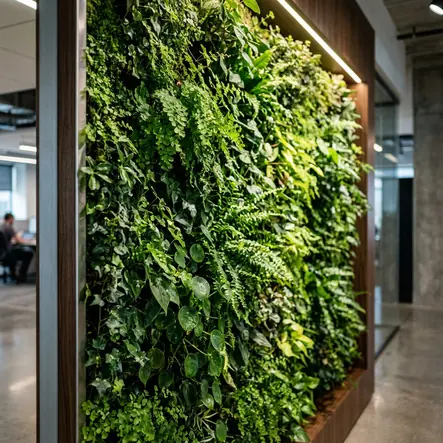
Installed and maintained, planted or preserved, sized to the wall and the light available.
Seasonal and Christmas
Trees, wreaths and interior dressing, supplied, installed, maintained and removed to a set date.
Outdoors
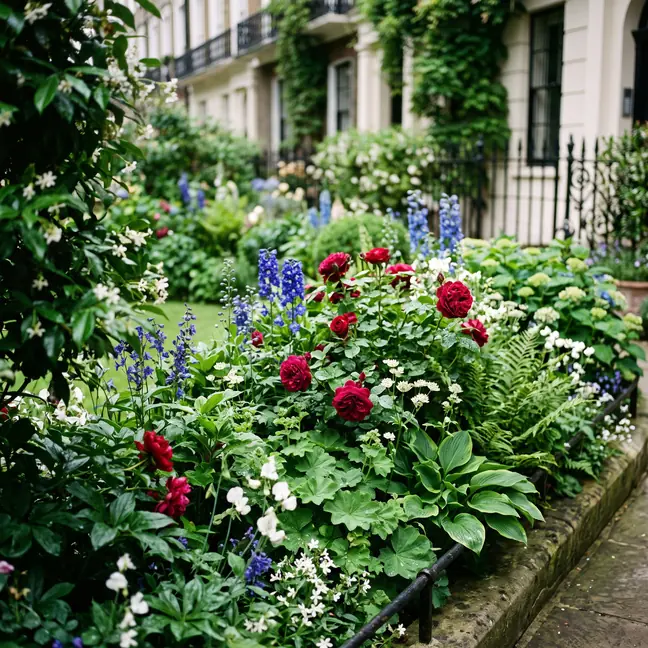
Gardens and landscaping
Maintenance, planting, terraces and full landscaping projects, for private gardens and commercial exteriors alike.
Garden maintenance
Regular visits across the year, or a single visit to bring a garden back to where it should be.
Planting and borders
Replanting, restructuring and succession planting so a border holds its interest through the seasons.
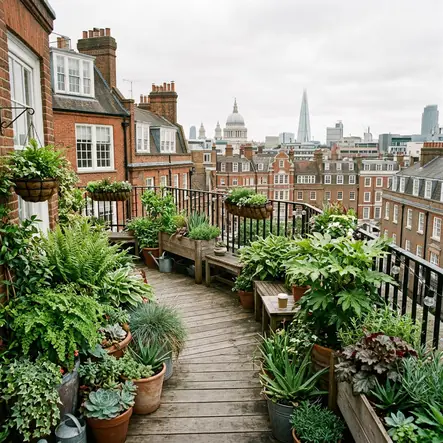
Terraces and roof gardens
Planting and upkeep for exposed spaces, with species and containers chosen for wind and shallow depth.
Window boxes and entrances
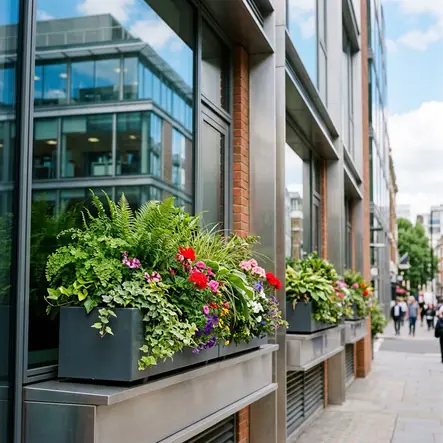
Changed with the season and maintained on a schedule, for restaurants, shopfronts and private houses.
Landscaping
Design and build, from paving, walls and levels through to the planting that goes on top of them.
Seasonal displays
Spring and summer changes, autumn structure, and winter and Christmas dressing for outside spaces.
Recent work
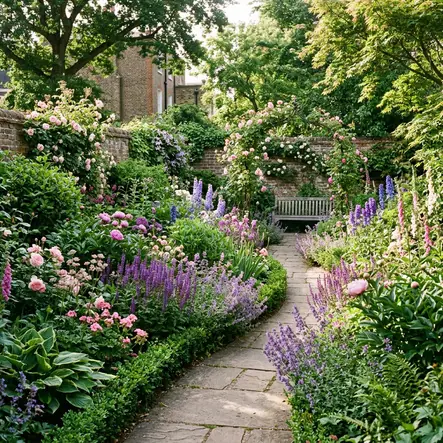
Work we have installed.
Detail
What you get, and how we work.
Clients
Who we work with.
- Hotels
- Restaurants and bars
- Workplaces
- Members’ clubs
- Retail
- Private houses
Work ranges from a single planted display to a building serviced weekly, and from replanting a set of borders to designing and building a garden from the ground up. Interior landscaping is the trade term for part of it, though few people outside the industry use it, and it covers only the indoor half of what we do.
One supplier
Flowers, plants and gardens on one visit schedule.
Most planting suppliers do planting. We are a florist that also plants, maintains and gardens, so the fresh flowers in a reception, the planting around it, the window boxes outside and the Christmas dressing in December can run on one schedule with one team, on one invoice. One set of visits, one point of contact, and a scheme where the flowers and the planting have been considered together rather than arriving from separate suppliers who have never spoken.
Book a site visit
Every scheme begins with looking at the space.
We will come and look at the space, indoors or out, and propose something specified to it. No charge and no obligation.
Plants and gardens — common questions
Answers, from the horticulturists who do the visits.
Is it better to hire indoor plants or buy them?
It depends on whether you want to own the plants or the outcome. Buying suits an organisation with someone genuinely willing to care for them, and it works well where the planting is simple and the light is good. Hiring suits everyone else, because the plants remain our responsibility rather than a job that quietly falls to whoever sits nearest. Under an ongoing arrangement we replace anything that fails or outgrows its position as part of the service, so the display stays at the standard it was installed at rather than declining slowly across a year. The other consideration is flexibility. Hired displays can be changed as the space changes, which matters more than people expect in buildings that reconfigure, and it means a poor initial choice is not a permanent one.
What is included in a plant maintenance arrangement?
Watering, feeding, pruning, cleaning and turning, along with checking each plant for pests and for the early signs of stress that are easy to miss until they are not. We top up and refresh planting media, tidy containers, and remove anything that has finished. Where the arrangement covers plants we have supplied, replacement is part of the service rather than a separate charge, so a plant that fails or outgrows its position is simply changed. Visit frequency is set to the planting and the conditions rather than to a standard interval, because a bright reception with large specimens and a dim meeting room with small ones do not need the same attention. We also flag anything structural we notice, such as a drainage problem or a heat source quietly cooking a plant, since those are usually cheaper to fix than to keep replacing around.
Why is there no price list?
Because plant prices move. We buy direct from growers, and what a specimen costs this month is not what it cost last month — season, availability and size all shift it, and quantity shifts it again. A published rate card has to carry a buffer wide enough to cover the worst case, which means every client pays for movement that may never happen. Pricing against live cost at the time of quoting is simply cheaper for the client, and it is why we would rather see a space and price a real scheme than publish a number that has to be wrong in one direction or the other. What shapes a quote is the size and number of plants, how often we visit, the specification of the containers, and access — a roof terrace or a building with restricted loading hours takes longer to service than a ground-floor reception.
Do you take on one-off work, or is it ongoing only?
Both. Some clients want a scheme designed, installed and then handed over, and some want a single visit to reset a garden that has got away from them. Others want us on a schedule across the year. We are set up for all three. Where the work is a one-off purchase or installation, standard terms apply rather than the maintenance arrangements that come with ongoing work, and we will be clear about which applies before anything is agreed. This is a genuine difference from most of the sector, where the commercial model depends on tying the initial installation to a maintenance agreement.
Do you do hard landscaping as well as planting?
Yes. Paving, walls, steps, levels, drainage and the groundwork that has to happen before anything is planted, as well as the planting itself. Working across both matters more than it sounds, because a scheme designed by one party and built by another tends to lose something at the handover, usually in the details that determine whether planting establishes properly. Taking a project from design through construction to the first year of maintenance means the person who chose the plants is the person who prepared the ground for them. For larger schemes we will say plainly at the outset where specialist trades are needed.
Which plants work in a space with very little natural light?
More than people assume, though the honest answer is that low light limits the choice rather than removing it. Aspidistra, sansevieria, zamioculcas and several of the philodendrons hold their form in genuinely poor light, and the tougher ferns and calathea do well in the diffuse light of an interior away from windows. What tends to fail is anything grown for flowering or for strong variegation, since both need light to hold. Air conditioning is usually the bigger problem rather than light itself, because it dries the air continuously and few interior plants enjoy it. Where a position is truly dark we would rather specify a preserved or artificial display and say so, than install something living that will decline for six months.
How often do you visit?
Set by the planting rather than by a standard interval. Larger specimens in good light and generous containers can go a fortnight comfortably. Small plants, bright positions, and anything near a heat source or air conditioning need weekly attention. Exterior planting is seasonal by nature, with more frequent visits through the growing season and fewer through winter, aside from the structural work that is best done in the cold months. We propose a schedule after seeing the site and adjust it once we know how the space actually behaves, which is usually a little different from how it looks on a first visit.
Can flowers, plants and garden work be on one arrangement?
Yes, and this is the part most suppliers cannot offer. Fresh flowers, interior planting, exterior displays and seasonal work can run on one schedule, with one team, on one invoice. For a hotel or a restaurant that means the person changing the reception flowers is the person maintaining the planting and the window boxes, on the same visit rather than three separate appointments from three separate companies. It removes a considerable amount of coordination, and it means the flowers, the planting and the outside of the building are being designed to sit together rather than arriving independently.
What areas do you cover?
London, for planting, maintenance, gardening and landscaping. These are services that need people and vehicles on site regularly rather than a delivery, so the practical limit is what can be reached and serviced reliably on a schedule. For larger installation and landscaping projects we will look at work beyond London case by case, since a project with a defined start and finish is a different proposition from a maintenance round. Our shop and flower business serve customers nationwide, but the planting and gardening side is a London service.