Dragon tree care
Dracaena marginata
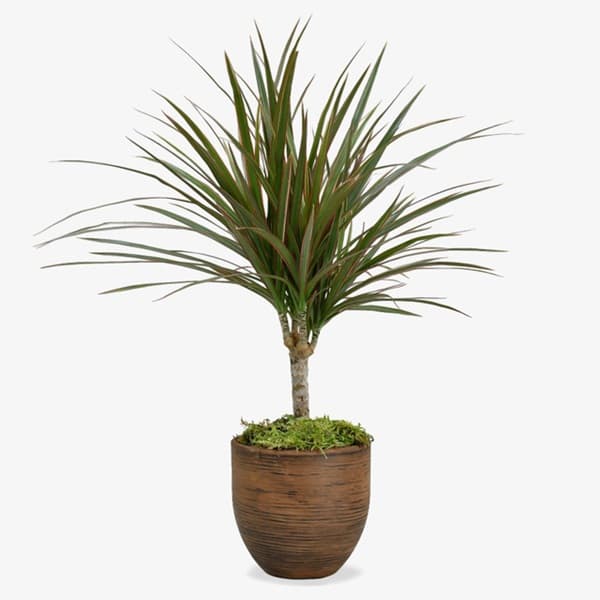
The dragon tree has the architectural elegance of a small palm with none of the demands. Slender ringed trunks topped with spiky leaves edged in red — the silhouette suits modern interiors. Drought-tolerant, slow-growing, and content with less light than most tropicals.
Light
Medium
Water
Infrequent
Sourcing
Direct from growers
Pet safety
Toxic
Difficulty
Very easy
How to care for it
Place in medium to bright indirect light. Dragon tree tolerates lower light than many houseplants. Avoid direct sun, which scorches the leaves. Water thoroughly on arrival if the soil is dry.
Water sparingly — let the top two inches of soil dry between waterings. Dragon tree tolerates drought well and resents wet roots. Use filtered or rainwater where possible; sensitive to fluoride. Feed lightly every couple of months in spring and summer. Wipe the leaves occasionally.
Brown leaf tips: almost always tap water fluoride or chlorine. Switch to filtered or rainwater. Yellow lower leaves: natural old-leaf turnover, especially in larger plants. Drooping or pale leaves: too little light. Mushy stem base: serious root rot from overwatering.
Common questions
Fluoride and chlorine in tap water. Dracaenas are particularly sensitive to both. Switch to filtered, distilled, or rainwater. If switching is not practical, leave tap water out overnight before using — some chlorine evaporates.
Yes — toxic. Dracaena marginata contains saponins; chewing causes vomiting (sometimes with blood), drooling, depression, and dilated pupils in cats. Keep firmly out of reach of cats and dogs that graze on plants. Cats especially are attracted to the linear leaves.
Slowly, but eventually quite tall. A healthy indoor specimen can reach two metres over many years. The slow growth keeps it in proportion to its room for a long time.
Usually thirst, despite its drought tolerance — the leaves droop visibly when the soil has been dry too long. Water thoroughly; the leaves should perk up within a day. Persistent drooping after watering suggests root rot from a previous overwatering.
Yes — and it encourages branching. Cut the trunk where you want the plant to branch (usually a bit below the spiky leaf cluster). New shoots will emerge below the cut. The cut-off top can be rooted in water to propagate a new plant.
Less often than most plants — every two to three years is plenty. The plant grows slowly and actually does well slightly pot-bound. Spring is the right time.
See also