Orchids care
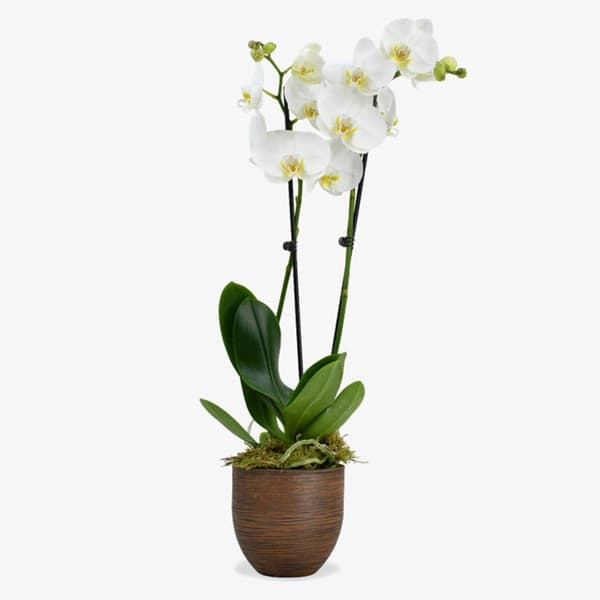
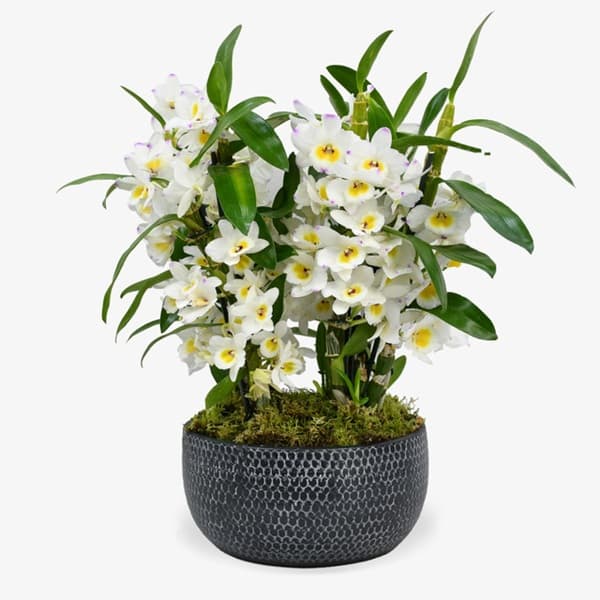
Orchids look fragile and behave nothing of the sort. Given the right light and a sparing watering hand, a healthy Phalaenopsis can flower for months and rebloom for years. This page covers the principles that apply across the orchids we send; the variety pages cover the differences.
Light
Bright indirect
Water
Moderate
Sourcing
Direct from growers
Pet safety
Pet-safe
Difficulty
Easy
How to care for it
Unbox the orchid in a draught-free spot. Place in bright indirect light — a few feet back from an east-facing window is ideal. Direct midday sun scorches the leaves. Do not water for the first day or two; orchids resent both dryness and waterlogging, and a settling-in period gives you a sense of the existing moisture level.
Water once a week in summer, every ten to fourteen days in winter. The right method matters more than the schedule: place the pot in the sink, let tepid water run through for thirty seconds, then drain fully. Never leave the roots sitting in water — root rot is the most common cause of death. Feed with a balanced orchid fertiliser at quarter strength every second or third watering during active growth.
Yellow leaves at the base: usually overwatering or stagnant water at the roots. Wrinkled leaves: underwatering or root damage — lift the plant and check the roots. Healthy roots are firm and green or silver; mushy brown roots need cutting away. Flower buds dropping before they open: a draught, sudden temperature change, or proximity to ripening fruit (the ethylene gas finishes the buds). After flowering, cut the stem just above the node where the lowest flower bloomed — many orchids will rebloom on the same spike.
Common questions
About once a week in summer, every ten to fourteen days in winter. The better test than any schedule: lift the pot. If it feels light, water. If it still feels heavy, wait. Orchids store water in their leaves and roots and tolerate dryness far better than waterlogging.
Most often a light issue. Orchids need bright indirect light to initiate a new flower spike. A slight night-time drop in temperature (around 10°C cooler than daytime) for a few weeks in autumn also helps trigger reblooming. Feeding with a balanced orchid fertiliser at quarter strength during the growing season encourages new spikes.
For Phalaenopsis, cut just above the node where the lowest flower bloomed — a new spike often emerges from there within months. For other orchids, cut the spent stem at the base. Always use clean, sharp secateurs to avoid spreading disease.
Either underwatering, or root damage preventing the plant taking up water. Lift the orchid out of the pot and inspect — firm green or silver roots are healthy; mushy brown roots need trimming. Repot in fresh orchid bark afterwards.
Yes. Phalaenopsis, Dendrobium and most common houseplant orchids are non-toxic to cats and dogs. We still recommend keeping them out of nibbling range — any plant material can upset a sensitive stomach.
Every two years, or when the bark has broken down into a peaty mush. Spring after flowering is the best time. Use orchid bark, not standard compost — orchid roots need air around them. Soak the bark briefly before potting.
Yes. Many orchids are epiphytes that naturally grow with roots exposed to the air. Aerial roots gather moisture from humidity. Leave them alone; cutting them off stresses the plant.
See also