Peace lily care
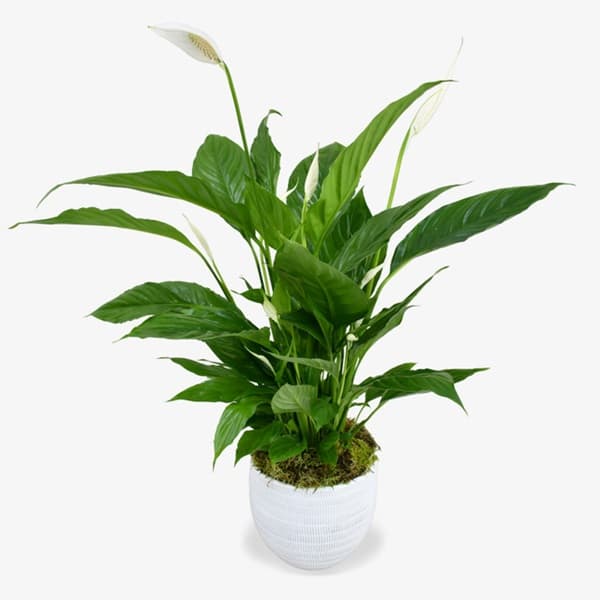
Spathiphyllum
The peace lily is one of the most forgiving houseplants in the catalogue — it will tell you when it needs water (the leaves droop dramatically and recover within an hour of a drink), it tolerates low light, and it flowers indoors when most plants do not.
Light
Low
Water
Regular
Sourcing
Direct from growers
Pet safety
Mildly toxic
Difficulty
Very easy
How to care for it
Place in medium to low indirect light. Peace lilies do well in north-facing rooms and in the kind of indirect light that struggles to support most flowering plants. Avoid direct sun — it scorches the leaves. Water thoroughly on arrival.
Water when the leaves start to look slightly soft, or when the top inch of soil is dry. The peace lily droops visibly when thirsty and recovers within an hour of being watered — it is the most communicative houseplant we send. Feed monthly in spring and summer. Wipe the leaves with a damp cloth occasionally.
Brown crispy leaf tips: dry air or fluoride in tap water. Switch to filtered or rainwater if you can. Yellow leaves: overwatering or too much direct light. No flowers: not enough light, or the plant has been overfed (nitrogen at the expense of bloom). Move it brighter and ease back on feeding.
Common questions
It is thirsty. Water it thoroughly until water runs from the drainage. The leaves will perk back up within an hour. The peace lily droops dramatically as a warning system — it is the easiest plant to read in the catalogue. If the soil is wet and it is still drooping, the cause is overwatering or root rot, not thirst.
Mildly toxic. Peace lily (Spathiphyllum) contains calcium oxalate crystals that cause drooling, mouth irritation, and vomiting if eaten. It is not in the same severe-toxicity category as true lilies (Lilium), which are deadly to cats — but keep peace lilies out of reach of pets that chew on plants.
Surprisingly little — peace lily is one of the few houseplants that genuinely thrives in low to medium indirect light. North-facing rooms work, as do interior spots a long way from a window. For more flowers, give it brighter indirect light (still no direct sun).
Three usual causes. Too little light — move it brighter (still indirect). Overfeeding with nitrogen-heavy fertiliser — switch to a balanced feed. The plant is too young or recently divided — give it time.
Wipe each leaf with a soft damp cloth every few weeks. Dust blocks the leaves from photosynthesising properly. Avoid leaf-shine products — they clog the pores.
Almost always fluoride or chlorine in tap water. Peace lilies are sensitive to both. Use filtered, distilled, or rainwater. If switching is not practical, leave tap water out overnight before using — some chlorine evaporates.
When the roots fill the pot — typically every two years. Spring is best. Move up one pot size, no larger. Peace lilies actually flower better when slightly pot-bound.
See also