Philodendron care
Philodendron
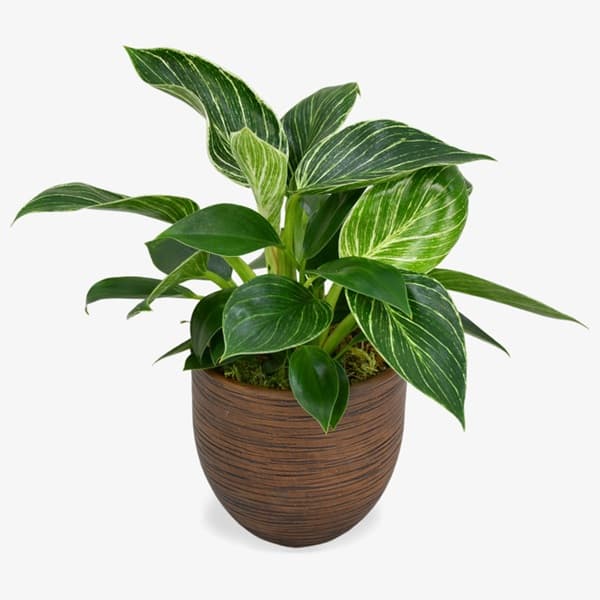
Philodendron covers a wide family of tropical climbers and shrubs — most carry heart-shaped or split leaves on trailing vines, and most are forgiving, fast-growing, and rewarding to care for. A reliable choice for trailing from a shelf or training up a moss pole.
Light
Medium
Water
Moderate
Sourcing
Direct from growers
Pet safety
Toxic
Difficulty
Easy
How to care for it
Place in medium to bright indirect light. Philodendron tolerates lower light than many tropical plants. Avoid direct midday sun. Water thoroughly on arrival if the soil is dry.
Water when the top inch of soil feels dry. Philodendron does not like to sit in wet soil. Feed monthly in spring and summer. Wipe the leaves with a damp cloth occasionally. Train climbing varieties on a moss pole or trellis; trim trailing varieties to encourage bushier growth.
Yellow lower leaves: overwatering or natural old-leaf shedding. Brown leaf tips: dry air or salt build-up — flush the soil occasionally with rainwater. Leggy stretching: too little light — move brighter. Small leaves on new growth: needs feeding or repotting.
Common questions
Yes — toxic. All parts of philodendron contain calcium oxalate crystals; chewing causes mouth pain, drooling, vomiting, and difficulty swallowing in pets. Keep firmly out of reach of cats and dogs that graze. If a pet has chewed any part, contact a vet promptly.
Quickly, in the right conditions. In bright indirect light with regular feeding, expect new leaves every couple of weeks in spring and summer. The vines extend rapidly. Pinching back the tips encourages bushier growth rather than long bare stems.
They look similar but are different plants. Philodendron leaves are softer-textured with rounder tips and the new growth comes with a sheath. Pothos leaves are thicker, glossier, and the variegation patterns differ. Care is broadly similar for both — they often get mistaken for each other.
Climbing varieties (P. hederaceum, P. erubescens) develop larger, more dramatic leaves when given something to climb. A moss pole, kept moist, encourages the aerial roots to attach and the plant to mature. Trailing varieties do not need this — they look best cascading from a shelf.
Every one to two years, when the roots fill the pot. Spring is best. Move up one pot size; philodendron does not like much extra room.
Most often overwatering — let the soil dry out between waterings. If only the oldest, lowest leaves yellow occasionally, that is natural old-leaf turnover and not a problem. Yellowing across many leaves at once is a sign something is wrong; check watering first, then light, then for pests.
See also