Rubber fig care
Ficus elastica
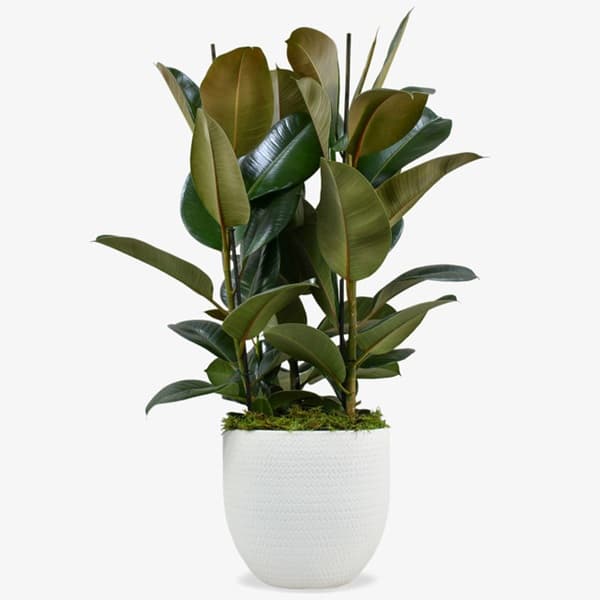
The rubber fig has been in fashionable interiors since the Victorian era — broad waxy oval leaves on an architectural trunk, slow-growing into a small indoor tree. The newer burgundy and variegated varieties show the leaf shape against richer colour.
Light
Bright indirect
Water
Moderate
Sourcing
Direct from growers
Pet safety
Mildly toxic
Difficulty
Easy
How to care for it
Place in bright indirect light — rubber fig wants more light than most ficus species. Avoid direct sun on the leaves. Find its spot and leave it there; rubber fig dislikes being moved around and may drop leaves in protest. Water thoroughly on arrival if the soil is dry.
Water when the top inch of soil feels dry. The plant prefers slightly drier than wet. Feed monthly in spring and summer with a balanced liquid fertiliser. Wipe each leaf with a damp cloth every few weeks — the glossy surface holds dust, and dusty leaves photosynthesise poorly. Rotate the pot occasionally for even growth.
Leaf drop: the most common rubber fig complaint. Usually caused by being moved (especially to a darker spot), draughts, or sudden temperature change. Leaves will not regrow on the bare lower trunk, so prevention is the strategy. Yellowing leaves: overwatering. Brown crispy edges: dry air or salt build-up. Sap on leaves: rubber fig produces a sticky white latex when cut — it stains and can irritate skin; wipe with a cloth.
Common questions
Almost always a stress response. Common triggers: moving the plant to a new spot (especially a darker one), draughts from a door or air conditioning vent, sudden temperature change, or overwatering causing root rot. Find a good spot and leave it there — rubber figs hate change.
Mildly. Ficus elastica produces a milky white sap (latex) that irritates skin and the digestive tract if pets chew the leaves. Not severely toxic, but unpleasant. Keep out of reach of pets that graze.
Bright indirect light, regular feeding through spring and summer, and patience. Rubber fig grows slowly indoors but can reach two or three metres with time. Repot up a pot size every couple of years to give the roots room.
Yes — pruning the top encourages branching, which makes for a fuller, bushier plant. Spring is the right time. Use clean sharp secateurs and wipe up the white sap that bleeds from the cut (it is irritant and stains).
Most often overwatering. The plant prefers to dry out partway between waterings. If only the lowest leaves yellow occasionally, that is natural old-leaf turnover. Yellowing across many leaves means a problem — check the soil first, then the light, then for pests.
Yes — and they reward it visibly. Wipe each leaf gently with a soft damp cloth every couple of weeks. The glossy surface holds dust, which dulls the look and blocks light reaching the leaf. Avoid leaf-shine sprays; they clog the pores.
See also