Boston fern care
Nephrolepis exaltata
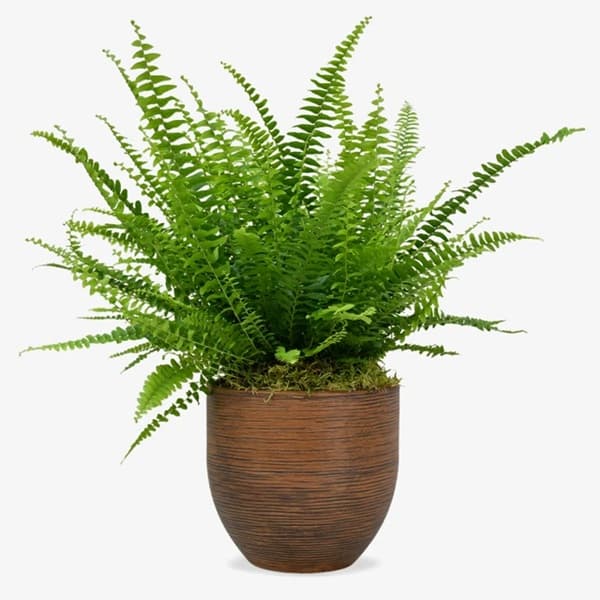
The Boston fern is the Victorian classic — feathery arching fronds in a soft mounded shape, perfect for hanging baskets and shelves. Easy to please when its three requirements are met: bright indirect light, humidity, and consistent watering. Less easy when they are not.
Light
Bright indirect
Water
Regular
Sourcing
Direct from growers
Pet safety
Pet-safe
Difficulty
Moderate
How to care for it
Place in bright indirect light — direct sun crisps the fronds. Bathrooms with windows are often ideal; the humidity suits a fern. Water thoroughly on arrival and don't let it dry out — Boston ferns recover slowly from a serious dry-out.
Keep the soil consistently moist but not waterlogged. Water when the top of the soil starts to feel dry — typically more often than other houseplants. Mist daily or place on a pebble tray with water; humidity is essential. Feed lightly every couple of weeks in spring and summer with a half-strength balanced fertiliser. Remove any browning fronds at the base.
Crispy brown fronds: dry air or under-watering. Yellow fronds: overwatering or too much direct light. Massive frond drop: dry air, dry soil, or both at once. Slow recovery — ferns do not bounce back quickly. New emerging fronds (light green coiled fiddleheads) are normal and welcome.
Common questions
Dry air or dry soil. Boston ferns evolved in genuinely humid forests; centrally heated indoor rooms are the wrong climate. Raise local humidity (group with other plants, pebble tray, or daily misting) and water more consistently. Once a serious shed starts, recovery is slow even after conditions improve.
Yes — Boston fern (Nephrolepis exaltata) is non-toxic to cats and dogs, listed as safe by the ASPCA. One of the safer larger houseplants for pet households. True ferns generally are pet-safe; some plants called 'fern' that are actually not ferns (asparagus fern, for example) are toxic.
More than the average heated indoor room provides. Aim for 50% or higher relative humidity if you can. Bathrooms with good windows often hit this naturally. Otherwise: group with other plants, use a pebble tray, or run a humidifier nearby.
More often than most plants. Check daily; water when the top of the soil starts to feel dry. The fern does not tolerate drying out completely. In summer this can mean watering several times a week; in winter, less. Use room-temperature water.
Two main causes: dry air (humidity too low) or inconsistent watering. Both at once — common in heated indoor rooms in winter — accelerate the browning. Trim brown fronds at the base, raise humidity, and water more consistently. New fronds will come in green.
Yes — for shape, or to remove damaged fronds. Cut at the base of each frond with sharp scissors. Heavy trimming is best done in spring, just before the active growth season. Light trimming is fine year-round.
See also