Zebra plant care
Calathea zebrina
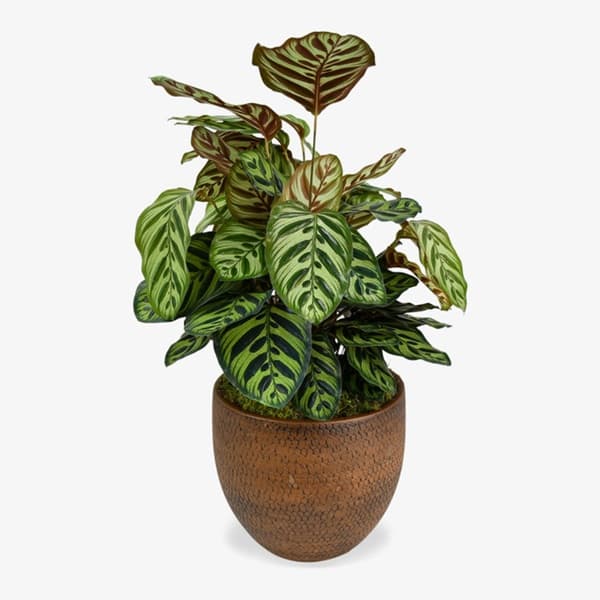
The zebra plant carries its name on its leaves — broad green ovals striped in lighter pale green, like brush strokes across each leaf. A prayer plant by nature: the leaves close upward at night and open again at dawn, a quiet movement you can almost watch happen.
Light
Bright indirect
Water
Regular
Sourcing
Direct from growers
Pet safety
Pet-safe
Difficulty
Moderate
How to care for it
Place in bright indirect light, away from direct sun (which fades the stripes). Calatheas like a touch of humidity — group with other plants or place in a bathroom with a window. Water thoroughly on arrival with filtered or rainwater if you have it; calatheas are sensitive to tap water minerals.
Water when the top inch of soil feels dry — calatheas like consistent moisture but not waterlogged roots. Use filtered or rainwater where possible. Feed monthly in spring and summer with a balanced liquid fertiliser. Wipe leaves occasionally to keep them dust-free. Higher humidity than the average room is welcome.
Brown crispy edges: low humidity or tap water sensitivity. Switch water source, raise humidity. Curling leaves: thirst, low humidity, or cold drafts. Faded stripes: too much direct light. Yellowing lower leaves: overwatering or normal old-leaf turnover at the base.
Common questions
Two main causes: low humidity (especially in heated indoor rooms in winter) or sensitivity to tap water minerals and fluoride. The fix is to raise the local humidity by grouping plants or using a pebble tray, and to water with rainwater or filtered water.
Yes — Calathea zebrina is non-toxic to cats and dogs. One of the more pet-friendly statement houseplants in the catalogue. Pets may chew the leaves out of curiosity, which is not harmful, though discourage it for the leaves’ sake.
Mild curling is normal — Calatheas are prayer plants that fold their leaves upward at night and open them at dawn. Dramatic, persistent curling means thirst, low humidity, or cold drafts. Check the soil and check the room temperature.
Bright indirect light. Direct sun fades the stripes and scorches the leaves. Too little light makes the plant leggy and the stripes faint. A spot a few feet from an east or north-facing window suits well.
A little, but the bigger humidity gain comes from grouping plants together or placing on a pebble tray with water in the base. Misting alone has only a brief humidity effect. Calatheas thrive in genuinely humid spots — a steamy bathroom can be ideal if it has good light.
Too much direct light or too little light. The plant produces stronger variegation in bright indirect light; direct sun bleaches the markings; very low light fades them. Move to brighter indirect.
See also